
 (1).webp)

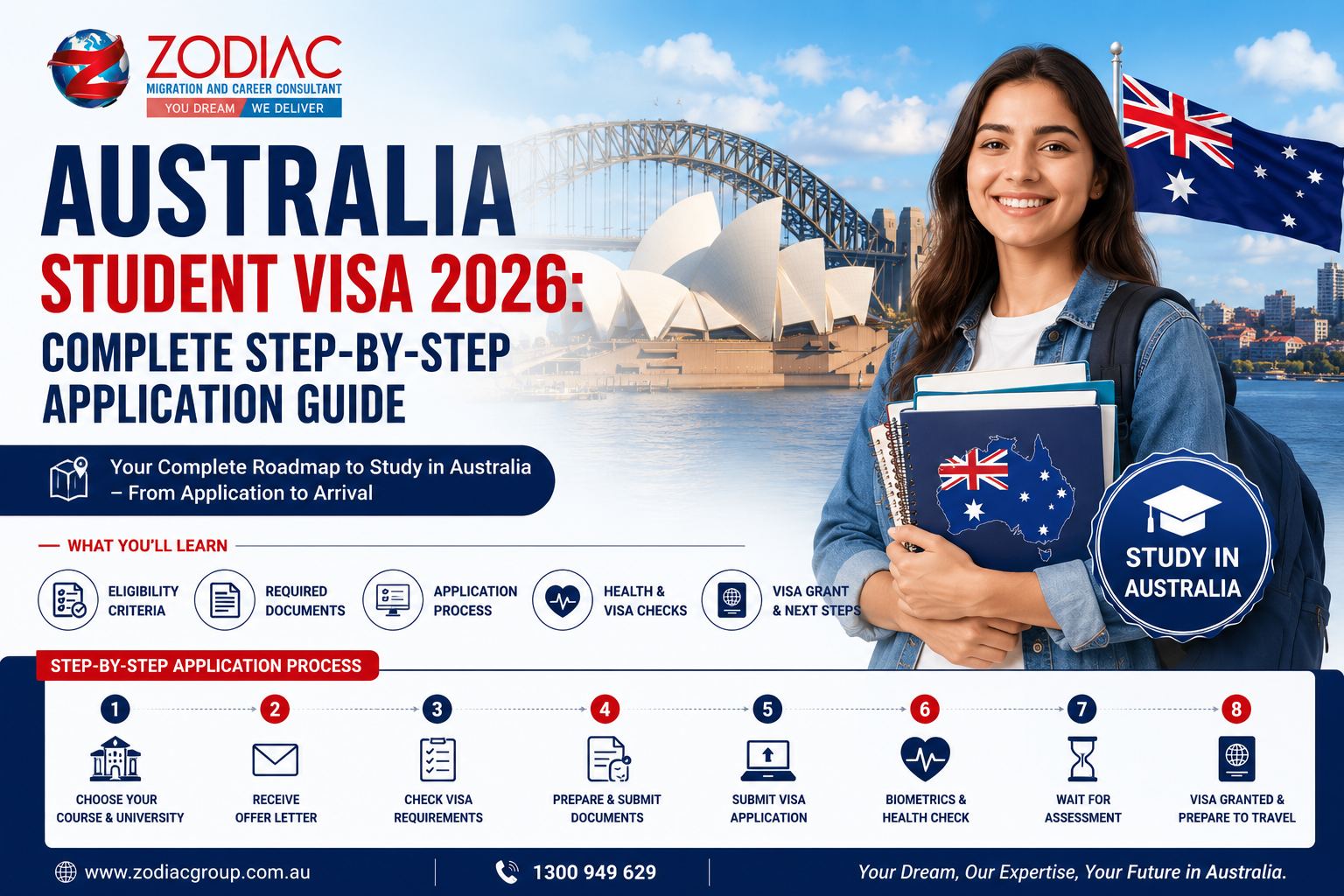
The Subclass 500 process isn’t complicated, but it’s unforgiving about order and completeness. Here’s the sequence that works.
1. Pick a CRICOS-registered Course
Your course has to appear on the Commonwealth Register of Institutions and Courses for Overseas Students. If it isn’t on CRICOS, it can’t support a student visa, however good the institution is.
2. Apply and Accept Your Offer
You’ll get a conditional or unconditional offer. Accepting it and paying the deposit is what unlocks the next step.
3. Get Your Confirmation of Enrolment
Your provider issues an electronic CoE. You can’t lodge a valid application without one. If you’re packaging two courses together, you need a CoE for each, and the gap between them generally has to be under two calendar months.
4. Sort Out Your Health Cover
Overseas Student Health Cover is compulsory and has to cover your entire visa period. Arrange it with an approved provider before you lodge.
5. Sit Your English Test
Use an accepted provider and a physical test centre. At-home and online tests are not accepted. What score you need depends on your course level and provider, so check your specific course rather than assuming a general number.
6. Put Your Financial Evidence Together
For 2026 the living-cost benchmark sits at around AUD 29,710 for a single applicant, on top of first-year tuition and travel. Bringing family raises it. Gather bank statements covering a decent stretch of time, something showing where the money came from, and your sponsor’s income documents if someone else is paying.
7. Write your Genuine Student Answers
You’ll answer structured questions inside the application about your circumstances, why you chose this course and provider, and what you intend to do afterwards. Around 150 words each. Write them yourself, about your own life. Recycled template answers are a known refusal trigger.
8. Lodge Through ImmiAccount and Pay
Set up an ImmiAccount, complete the Student visa (500) application, upload everything and pay. From 1 July 2026 the charge starts at AUD 2,500 unless you’re exempt, which is a steep jump from previous years, so budget for it properly. You’ll get a Transaction Reference Number to track things with.
9. Do your Health Checks and Biometrics
You may need a medical with an approved panel physician, and depending on your nationality, biometrics at a visa application centre. Move quickly on these. Everything else waits on them.
10. Wait, and Keep Your File Current
A decision can land at any point after lodgement. If your CoE changes while you’re waiting, upload the new one straight away.
Two Conditions to Know Before You Fly
You can work up to 48 hours a fortnight while your course is in session, and as much as you like during scheduled breaks. You also have to tell your provider your Australian address within seven days of arriving, and keep your enrolment, attendance and course progress in good shape the whole time you’re there.
Fees and thresholds get revised regularly, usually in July. Confirm the current numbers on the Department of Home Affairs website right before you lodge.