

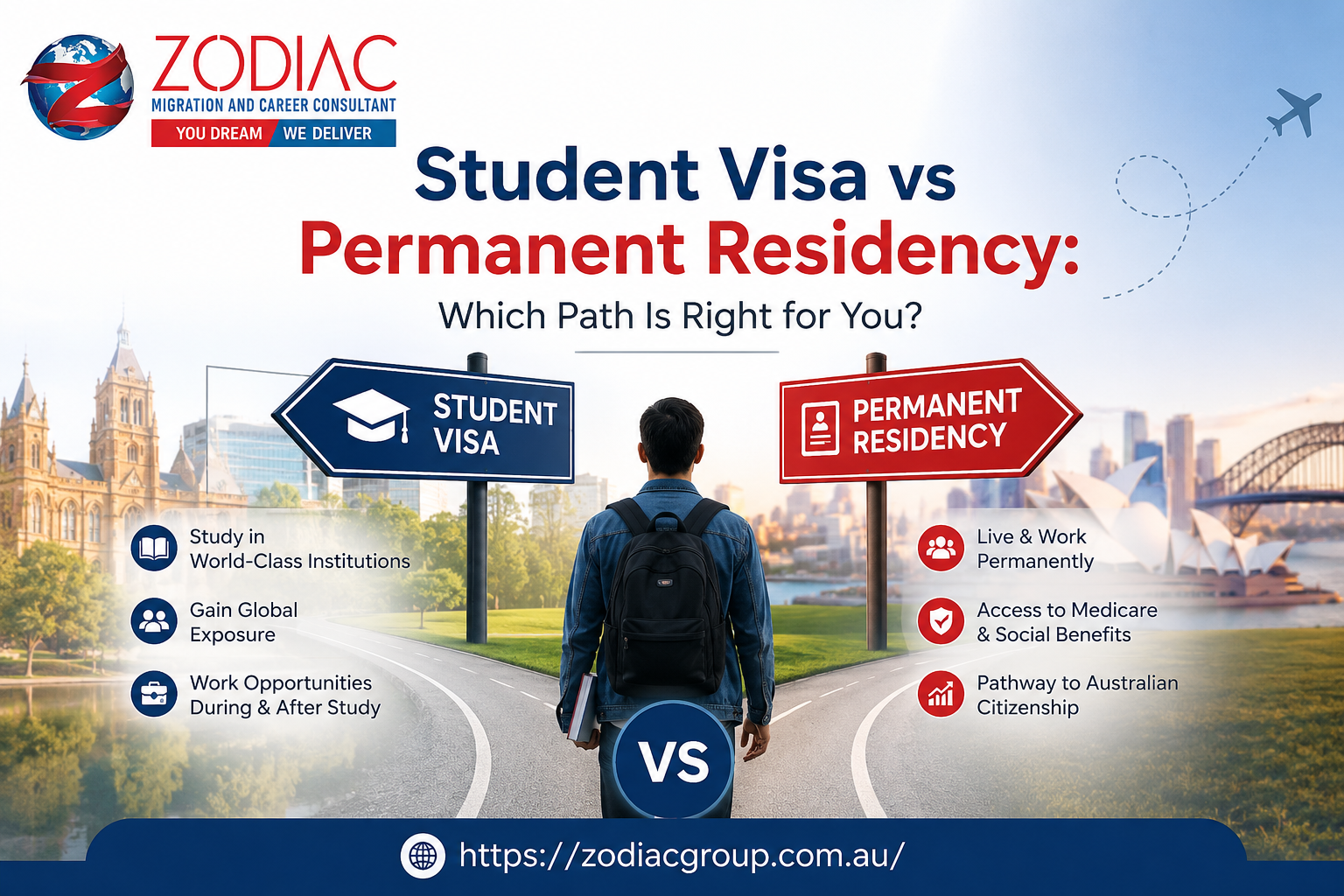
People ask this constantly, and the question is slightly off, which is exactly why it’s worth answering properly. A student visa and permanent residency aren’t two doors into the same room. One is temporary permission to study. The other is a permanent immigration status. You can’t pick between them the way you’d pick between two universities.
This is where experienced immigration and visa consultants can help you understand the available pathways, eligibility requirements, and long-term options before making a decision.
What Each One Actually Gives You
The Subclass 500 lets you study a registered course, work up to 48 hours a fortnight while your course is running, and stay for as long as your studies last. When the course ends and the visa expires, that’s it.
Permanent residency lets you live and work in Australia indefinitely, use Medicare, sponsor eligible family, and eventually apply for citizenship. You get there through skilled migration, employer sponsorship, family or business streams. Never through studying by itself.
Why The Two Get Muddled
Because study genuinely can be part of a migration pathway. The usual run is a student visa, then a Temporary Graduate visa once you finish, then some skilled work experience, then a points-tested or employer-sponsored permanent visa. Thousands of people complete that journey every year.
But it’s a chain of separate applications, each with its own criteria and each capable of failing on its own. Studying doesn’t put you on a conveyor belt.
The Comparison Nobody Makes for You
If what you want is the qualification, the student visa route is simple enough. Pick the course on academic merit and career fit, and treat any migration outcome as a bonus if it arrives.
If what you actually want is permanent residency, ask yourself a harder question before you enrol anywhere: could you qualify for a skilled visa right now, without studying at all? If your occupation, age, English and work experience already add up to a competitive score, then three years and a great deal of money on an Australian degree might be the slow, expensive route to somewhere you could reach sooner.
Age matters here in a way people underestimate. Points for age fall as you get older, so a long study pathway can quietly cost you the very points you’re trying to build.
Where The Real Risk Sits
Time. Occupation lists get reviewed and revised. Points thresholds move. States change their nomination priorities from one year to the next. A course you choose in 2026 because an occupation looks in demand will finish into a different landscape in 2029.
That’s not a reason to avoid studying in Australia. It’s a reason not to stake everything on one assumed outcome, and not to pay anyone who promises you one.

How to Actually Decide
Be honest with yourself about which of the two you’re really after. If it’s the education, choose the best course you can and enjoy whatever options open up. If it’s residency, pay for a proper assessment of where you stand today before you enrol in anything, and get it from a registered migration agent rather than an education agent whose commission depends on you signing up.
Both paths are perfectly legitimate. It’s confusing them that gets expensive.